When you look around your home, everything might look visually pristine. The kitchen countertops are wiped down, the hardwood floors are vacuumed, and the bed sheets are freshly changed. However, true cleanliness isn’t just about the surfaces that immediately catch your eye. In every house or apartment, there are dozens of overlooked, out-of-sight crevices where dust, dander, hair, and harmful bacteria silently pool together over time.
Neglecting these spots can seriously impact your indoor air quality and elevate seasonal allergies. This detailed house cleaning guide spotlights 10 hidden places to clean in your home that are likely missing from your routine, along with practical home cleaning tips to reclaim a truly sanitary environment.
1. The Dusty Blades of Ceiling Fans
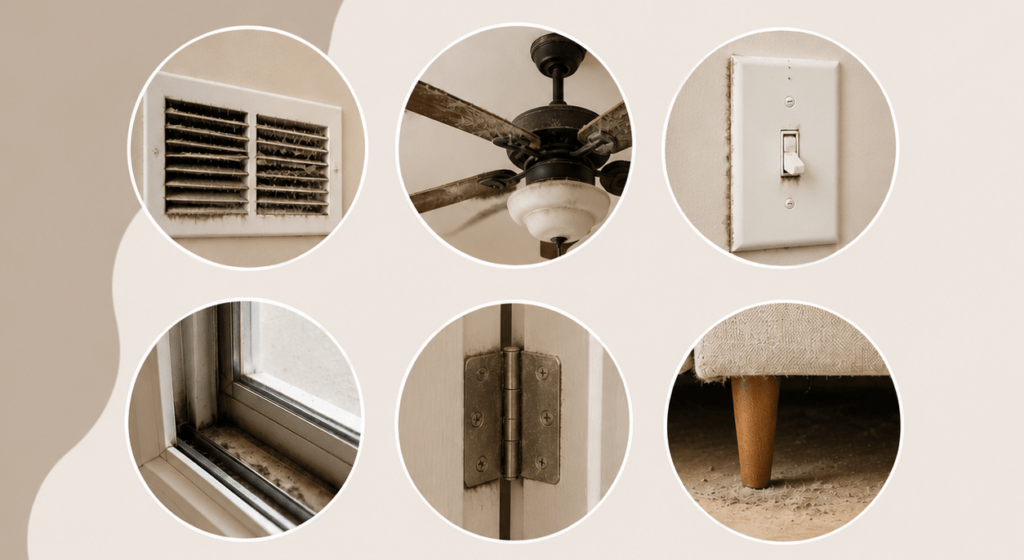
Ceiling fans are massive dust magnets, but because they sit high above our eye level, they are routinely ignored. When a fan sits idle, static electricity and airborne grease cause layers of dust, skin cells, and pet dander to bond to both sides of the blades. The moment you flip the switch, the centrifugal force flings these accumulated allergens right back into your living space, settling on your beds, couches, and carpets.
• How to clean it: To prevent dust from showering down all over your floor, use an old pillowcase. Slide the pillowcase over an individual fan blade, press it flat against the top and bottom surfaces, and pull it back. The pillowcase traps all the loose debris inside. Finish by wiping down the blades with a microfiber cloth damp with a mild all-purpose cleaner.
2. The Lost World Behind and Under Large Appliances
Think about the space behind your refrigerator, stove, and washing machine. Over months or years, food crumbs, spilled liquids, grease splatter, and loose pet hair fall over the edges. This creates a dark, undisturbed buffet for household pests like mice, ants, and roaches. Furthermore, the dust buildup on refrigerator coils forces the motor to work twice as hard, driving up your energy bills and shortening the appliance’s lifespan.
• How to clean it: Carefully pull your appliances out from the wall. Use a heavy-duty vacuum wand attachment to pull up the dense dust bunnies. Scrub the floor and the surrounding walls with warm water and heavy soap to strip away grease. Let everything dry completely before sliding the units back into place.
3. Scuffed and Neglected Baseboards
Baseboards anchor your rooms, but because they are located at ground level, they act as a landing shelf for falling dust and pet hair. Over time, scuff marks from shoes, vacuums, and pets make them look dull and yellowed. Cleaning your baseboards instantly brightens a room, framing your floors with a crisp, professional-looking edge.
• How to clean it: First, run a vacuum brush attachment or a dry broom over the trim to clear away the top layer of dry dust. Then, take a bucket of warm soapy water or a wood-safe cleaner and wipe them down with a microfiber rag.
• Pro Tip: Rubbing a clean dryer sheet over clean baseboards creates an anti-static barrier that repels future dust for weeks!
4. High-Touch, Germ-Ridden Light Switches
You probably clean your bathroom toilet and kitchen counters regularly, but when was the last time you disinfected your light switches? Every member of your household touches these tiny plastic squares multiple times a day—often right after coming home from public transport, handling raw food, or coughing. As a result, light switches and wall plates are hotspots for dust and germ removal.
• How to clean it: Never spray liquids directly onto an electrical switch or outlet plate. Instead, lightly spray a microfiber cloth or cotton pad with rubbing alcohol or a disinfecting spray. Wipe the switch toggle and the surrounding wall plate thoroughly, allowing the alcohol to air dry and kill the bacteria.
5. Clogged Air Vents and Grilles
Your HVAC vents and return grilles constantly cycle the air you breathe. If the metallic slats are caked with dust and pet hair, your heating and cooling systems are blowing those exact particles right back through the house. Clogged vents also choke your airflow, placing strain on your HVAC unit and lowering your home’s energy efficiency.
•How to clean it: Unscrew the vent covers if possible, or leave them attached and use a brush vacuum tool to clear out loose dust. For a deep clean, remove the grilles completely and wash them in a sink filled with warm water and dish soap. Wipe down the accessible lip of the ductwork before screwing the clean, dry grilles back into place.
6. Grimy Window
Window panes get wiped down during spring cleaning, but the tracks below them are left behind. When windows are cracked open, outdoor pollen, city soot, insects, and dirt settle directly into the tracks. Combined with condensation and humidity, this mixture turns into a thick, dark grime that can breed toxic mold and make windows stick or jam.
• How to clean it: Sprinkle a light layer of baking soda directly into the track, then pour a small amount of white vinegar over it. Let the mixture fizz and break down the crust for 5–10 minutes. Use an old toothbrush to scrub into the narrow corners, then wipe away the sludge with a paper towel.
7. The Abyss Under Low-Profile Furniture
Out of sight, out of mind. The vast floorspaces beneath your couches, beds, dressers, and armchairs are prime targets for forgotten cleaning areas. Even if you vacuum around your furniture, air currents push tumbling dust balls and dander deep underneath, where they sit and degrade your home’s air quality.
• How to clean it: If your furniture is too heavy to move regularly, invest in a flat, flexible microfiber duster designed specifically for tight spaces under appliances. Alternatively, use a long vacuum wand to sweep the floor blindly. Make this a mandatory part of your monthly deep cleaning checklist.
8. The Unsanitary Mattress Surface
We spend a third of our lives in bed. While we wash our pillowcases and sheets weekly, our mattresses absorb sweat, body oils, dead skin cells, and microscopic dust mites directly through the fabric. Neglecting your mattress can trigger midnight sneezing fits, skin irritation, and respiratory issues.
• How to clean it: Strip all bedding and vacuum the entire mattress surface using an upholstery attachment, paying close attention to the quilted seams. Sprinkle a generous amount of baking soda over the mattress to absorb odors and moisture. Let it sit for at least an hour, then vacuum it off entirely.
9. The Tops of Door Frames and Moldings
Look up at the top edge of your bedroom or bathroom door frames. Because these ledges sit roughly six to seven feet high, they are invisible from a standing position. Thick layers of dust accumulate undisturbed on these flat lips, falling off in clumps whenever a door is forcefully slammed shut.
• How to clean it: Use an extendable microfiber duster to clear these high horizontal planes. If you do not have an extendable wand, safely use a step stool and wipe down the top ledge with an all-purpose cleaning wipe. Repeat this process for the tops of window frames and large hanging picture frames.
10. Sticky Kitchen Cabinet Tops
In homes where kitchen cabinets don’t extend all the way to the ceiling, the open space on top is a disaster zone. As you cook, vaporized grease rises, drifts, and settles onto these upper surfaces. When airborne dust lands on that sticky grease layer, it forms a thick, yellowish, concrete-like sludge that is incredibly difficult to remove with standard dusting tools.
• How to clean it: Spray the area with a heavy-duty degreaser or a mixture of warm water and grease-cutting dish soap. Let it sit to soften the buildup, then scrub it away with a non-scratch sponge.
• Pro Tip: Once dry, line the tops of the cabinets with sheets of wax paper or newspaper. Next time, instead of scrubbing, you can simply roll up the dusty paper and replace it with a fresh sheet.
The Ultimate Healthy Home Solution - Tackling a thorough deep cleaning checklist takes an immense amount of physical labor, specialized tools, and precious hours out of your week. When life gets busy, it's easy for these hidden, hard-to-reach zones to fall completely by the wayside. Professional cleaners know exactly where dirt, dust, and bacteria hide—ensuring every corner of your home gets the attention it deserves.